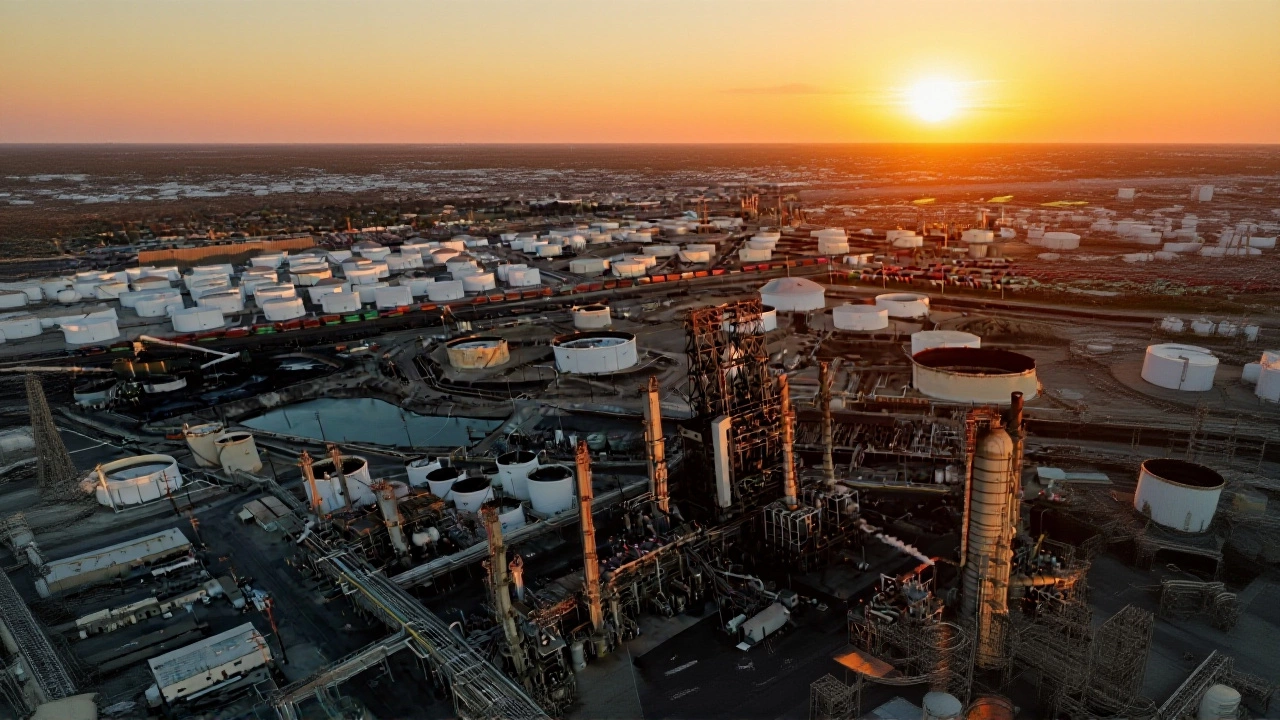
When Donald Trump, President of the United States, announced a temporary two-week ceasefire with Iran on April 8, global oil markets didn't just dip—they crashed. Within hours, the psychological barrier of $100 per barrel collapsed for both major benchmarks. It was a stark reminder that geopolitical tension is the single biggest driver of energy volatility right now.
The twist? This wasn't a permanent peace treaty. It was a fragile, 15-day pause in hostilities. But for traders who had been pricing in catastrophic supply disruptions from the Strait of Hormuz, even a brief reprieve felt like oxygen. The market’s reaction was instantaneous and brutal to sellers.
The Numbers Behind the Crash
Let’s look at the raw data because the scale of this drop is staggering. Before the announcement, Brent crude—the international benchmark—had surged past $109 per barrel, fueled by fears of "devastating" US strikes on Iranian infrastructure. That fear premium evaporated overnight.
By early trading hours on April 8, here is what happened:
- Brent Crude: Dropped 13.22% (down $14.45) to settle around $94.82 per barrel. At one point, it slid below the $100 mark entirely.
- West Texas Intermediate (WTI): The US benchmark fell even harder, plunging 14.02% (down $15.83) to $97.12. In some futures contracts, WTI briefly touched levels as low as $92 per barrel within an hour of the news.
- Total Decline: Some reports indicated a cumulative drop of over 15-23% depending on the specific contract and timing of the trade.
To put this in perspective, before the conflict escalated, Brent was hovering near $70. The war risk had added nearly $40 to the price. The ceasefire stripped most of that back instantly. It’s not just a correction; it’s a re-pricing of reality.
Why the Strait of Hormuz Matters
Here’s the thing: you can’t understand this crash without understanding geography. The Strait of Hormuz is a narrow waterway between Oman and Iran. It’s the world’s most important oil chokepoint. Roughly 20% of the world’s total oil supply passes through those waters daily.
When tensions rose, the threat was simple: if Iran blocked the strait, global supplies would constrict severely, sending prices soaring. Analysts like Mamata Tiwari, anchor on News18, described the ceasefire as the "best news" to emerge from the conflict precisely because it de-risked that specific bottleneck. Ships could move again. The immediate panic subsided.
Ripple Effects Across Global Markets
Oil doesn't exist in a vacuum. When it falls, other assets react. And on April 8, the ripple effects were massive.
Equity markets, which had been battered by uncertainty throughout the day, bounced back hard. The Dow Jones Industrial Average futures spiked more than 900 points—a roughly 2% gain—after hours. Asian markets followed suit. Japan’s Nikkei index jumped nearly 5%, while South Korea’s KOSPI rose about 4%. Even safe-haven assets like gold and silver saw sharp moves, with gold up 4% and silver climbing over 2% as investors rotated out of pure fear-based positioning.
It’s a classic risk-on rally. Investors realized that while the war isn’t over, the worst-case scenario (total blockade) had been paused. For now.
A Fragile Truce: What’s Next?
But wait. Don’t get too comfortable. Every report emphasizes that this is a *temporary* ceasefire. It lasts for approximately 15 days. There is no long-term peace deal signed. No disarmament agreements. Just a pause in fighting.
This creates a volatile environment for the next two weeks. If negotiations stall or violence resumes after the 15-day window, oil prices could rocket back above $100—and potentially higher. The underlying structural risks haven’t disappeared; they’ve just been put on ice.
Market watchers are now focused on diplomatic channels. Will this pause lead to talks? Or is it merely a tactical retreat? Until we know, expect continued swings in energy prices. The era of stable, predictable oil costs is likely behind us for the foreseeable future.
Frequently Asked Questions
How long does the ceasefire last?
The current agreement is a temporary truce lasting approximately 15 days. It is not a permanent peace treaty but rather a pause in hostilities intended to reduce immediate tensions and allow for potential diplomatic discussions.
Why did oil prices drop so sharply?
Prices plummeted because the ceasefire reduced the immediate risk of supply disruption in the Strait of Hormuz. Previously, markets priced in a potential blockade that would cut off 20% of global oil flow. The truce removed that imminent threat, causing a rapid sell-off in oil futures.
What happened to stock markets after the announcement?
Global equity markets rallied significantly. Dow Jones futures gained over 900 points, while Asian indices like Japan's Nikkei and South Korea's KOSPI rose by 5% and 4% respectively. Investors shifted from fear-driven caution to optimism as the threat of wider conflict diminished temporarily.
Will oil prices stay below $100?
Not necessarily. While prices dropped below $100 immediately following the news, the ceasefire is only valid for 15 days. If tensions rise again or the truce collapses, prices could quickly rebound to previous highs or exceed them due to renewed supply fears.
Who announced the ceasefire?
US President Donald Trump announced the decision to halt military actions and agree to a two-week ceasefire with Iran. This move was widely interpreted as an effort to de-escalate the situation before any "devastating" strikes were carried out.